The adoption of renewable energy technologies is accelerating worldwide as people and businesses search for sustainable and cost-effective alternatives to conventional fuels. One of the most practical solutions for households, institutions, and commercial setups is the solar water heating system , which provides an eco-friendly way to meet hot water needs. At the same time, the demand for solar industrial solutions is rapidly growing, especially in manufacturing sectors that require large-scale energy for daily operations.
Understanding Solar Water Heating Systems
A solar water heating system uses sunlight to heat water through specially designed collectors, storage tanks, and circulation systems. These setups reduce dependency on electricity or gas-based water heaters, helping users cut costs while lowering carbon emissions.
Types of Solar Water Heating Systems:
- Flat Plate Collectors (FPC) – Durable and suitable for a wide range of climates.
- Evacuated Tube Collectors (ETC) – Highly efficient and ideal for colder regions.
Such systems are widely used in homes, hotels, hospitals, and hostels where hot water consumption is frequent and significant.
Benefits of Solar Water Heating Systems:
- Cost Savings – Cuts down electricity and fuel expenses.
- Eco-Friendly – Reduces greenhouse gas emissions.
- Low Maintenance – Once installed, requires minimal upkeep.
- Durability – Can last for 15–20 years with proper care.
The Rise of Solar Industrial Applications
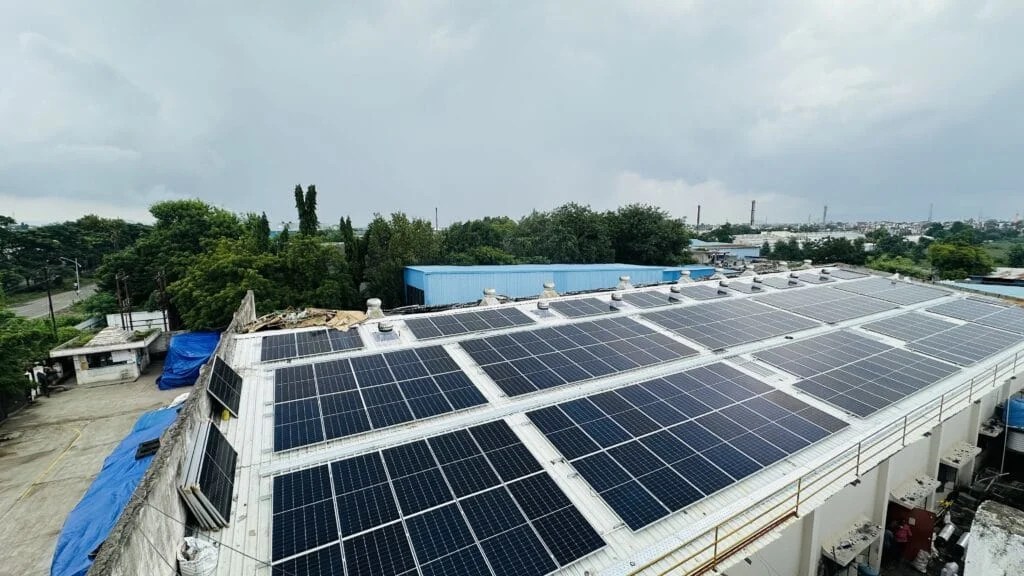
While solar water heaters serve homes and small businesses, the scope of solar energy in industries is far greater. Solar industrial applications include solar photovoltaic (PV) panels for electricity generation and solar thermal systems for heating, drying, and steam production.
Industries like textiles, food processing, pharmaceuticals, and chemicals require continuous heating and electricity. Switching to solar reduces operational costs, ensures compliance with sustainability standards, and strengthens energy security.
Benefits of Solar in Industrial Use:
- Large-Scale Savings – Significant reduction in energy bills for power-intensive processes.
- Sustainability Goals – Helps industries meet global green energy standards.
- Energy Independence – Less reliance on volatile fossil fuel markets.
- Brand Value – Businesses adopting renewable energy strengthen their corporate social responsibility (CSR) image.
Government Support for Solar
The Indian government has launched several initiatives, subsidies, and financing schemes to promote solar adoption in both residential and industrial sectors. Solar industrial Net metering, tax benefits, and low-interest loans are encouraging more companies and households to invest in solar energy solutions.
Why Invest in Solar Today?
Energy prices are rising steadily, and fossil fuels are becoming scarce. Investing in solar systems ensures long-term savings, environmental benefits, and energy independence. For households, solar water heating systems provide daily utility at low cost. For industries, solar power integration creates a sustainable production model while reducing operational expenses.
Conclusion
From homes to large factories, solar technology is transforming the way energy is consumed. A solar water heating system offers households an affordable way to meet hot water needs sustainably, while solar industrial applications provide businesses with scalable, efficient, and eco-friendly energy solutions. Together, these innovations are paving the way for a cleaner and greener future.
 pulsemarket
Leave a comment