You can tell a lot about a room within the first two seconds of stepping into it—and usually, it has nothing to do with the furniture or the fancy lighting fixtures. It’s strange, right? We spend so much time obsessing over big design choices, yet the quiet, almost invisible touches are the ones that convince our brains that a space is “finished.”
I’ve walked into rooms that were clearly built with expensive materials, but something just felt… off. The kind of off you can’t explain immediately. Then, after a few minutes, you notice the little things—the awkward transition between tiles, the chipped edge along the wall, that strange gap between two panels. Suddenly the whole puzzle makes sense.
Good design, I’ve realized, isn’t loud. It’s not even trying to impress you. It’s the sum of details that behave well together—details you don’t consciously notice, but you’d definitely miss if they weren’t there.
One of the elements that designers swear by, even though most homeowners rarely talk about it, is the ever-practical T profiles . I know, they don’t sound glamorous. But these simple little metal connectors do the kind of work that saves entire flooring layouts from looking like a patch-up job. If you’ve ever tried joining two different materials—say, marble and laminate—you know the marriage isn’t always smooth. Texture, height, color—nothing wants to cooperate. A T-shaped profile quietly steps in and makes them look like old friends. Clean. Intentional. Balanced.
I’ve seen people use them between tiles and wood, wood and vinyl, and even across large wall panels. They’re not showy, but they’re the line that tells you the designer knew what they were doing. Sometimes it’s just a tiny strip of champagne gold or matte black, but that’s enough to give a space this silent sense of order. Like that one friend in a group who never says much but somehow keeps everyone functioning.
What surprises me the most is how often people overlook these connectors until someone points them out. A friend of mine renovated her living room recently, and when she showed it to me, I kept staring at the floor. Something about it felt unusually polished—done, complete. She laughed when I finally asked about it and said, “It’s just a trim.” Just a trim! Turns out the simplest details are often the ones pulling the most weight.
And once you start noticing those little design elements, you won’t be able to unsee them. The good ones make you appreciate the room in a way you can’t fully explain. The bad ones—well, you feel them like a loose thread on a sweater.
Of course, good finishing isn’t limited to flooring. Wall panels, furniture edges, cabinetry—all of these areas need their own version of tiny helpers. And that’s where the equally underrated T patti comes in. It’s essentially a slim metal strip that designers use to break up surfaces or add a little definition. Not loud, not screaming for attention, but very much doing its job with quiet confidence.
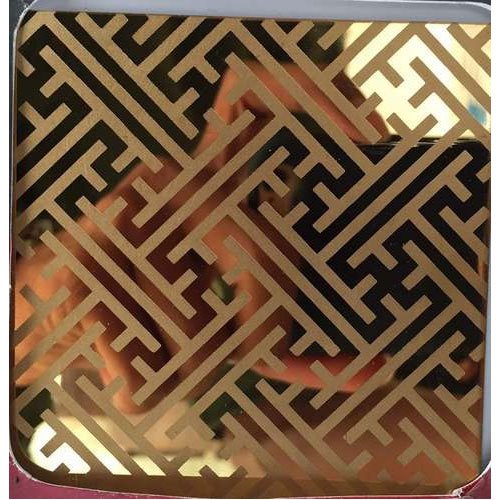
These pattis can turn a plain wardrobe into something elegant, break the monotony of wall paneling, highlight a niche, or even create geometric divisions that make a space look curated rather than “just put together.” Think of them like the jewelry of interior design—small, but capable of changing the entire outfit. A dash of gold here, a line of black there, and suddenly the room has a rhythm.
One of my favorite uses of these slim trims is on large panelled walls. Without breaks or detailing, big surfaces can look too flat or too heavy. But introduce a few metallic lines—straight, clean, intentional—and suddenly the whole wall feels like art. And it doesn’t matter whether the finish is brushed steel, rose gold, antique bronze, or black titanium. Each one brings its own personality without overpowering anything around it.
What fascinates me most about elements like T pattis and profiles is how perfectly they represent a shift in the way we think about home design. There was a time when people believed beauty came from grandeur—massive chandeliers, marble everything, heavy décor. But today? People gravitate toward meaning. Toward calm. Toward subtlety. We want homes that breathe rather than shout.
And subtle details—those quiet finishing touches—help create that feeling. They’re functional, yes, but also decorative in the softest, smartest way. They help avoid cracks, gaps, uneven transitions, and oddly merging materials, but they also give spaces a certain poise. A maturity. Almost like they’re standing up straighter.
Maybe that’s why designers love them so much. They’re working behind the scenes, tying everything together with an almost poetic restraint.
The truth is, most of us don’t want houses that feel like museum sets. We want spaces that feel lived in and comfortable, but also thoughtful and intentional. Spaces that make us pause—not because they’re dramatic, but because they feel oddly satisfying, even if we can’t articulate why.
And that’s the magic of these tiny metal details. They’re easy to miss but impossible to replace. They define edges, transitions, and divisions in a way that makes a room feel whole. They’re tiny, yes—but they’re mighty.
 pulsemarket
Leave a comment