If you’ve been driving for a while, you probably remember when number plates were an afterthought. You got the vehicle, the dealer slapped on a plate, and that was that. No one talked about security features or standardized fonts. Plates were just plates. Somewhere along the way, though, that simplicity began to crack—and not without reason.
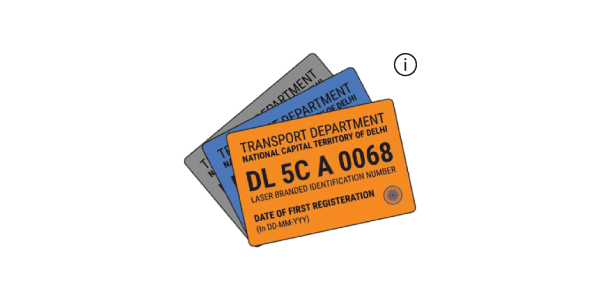
As cities grew and traffic systems became more digital, the old-style number plates started showing their age. They were easy to duplicate, easy to tamper with, and frankly, too loose for a system that now relies on cameras, databases, and automated checks. That’s when high-security number plates quietly stepped into the picture, not with a bang, but with steady persistence.
At first, many drivers rolled their eyes. Another rule, another update, another thing to spend time and money on. It felt like bureaucracy doing what bureaucracy does best. But over time, the logic behind the move started to make sense, even to the skeptics.
High-security number plates aren’t just shinier metal. They come with tamper-proof locks, laser-etched identification codes, and a uniform design that’s hard to mess with. The goal isn’t to make life harder for regular drivers—it’s to make life harder for people trying to game the system. Stolen vehicles, fake registrations, cloned plates… all of these become more difficult when every plate follows the same secure standard.
There’s also a subtle benefit people don’t talk about much: clarity. Traffic cameras, toll booths, parking systems—they all work better when plates are readable and consistent. Less misreading means fewer wrongful fines and fewer arguments. In a strange way, standardized plates actually reduce friction rather than create it.
Still, knowing why something exists doesn’t always make the process feel easier. The real question most people have is practical: how do I get this done without wasting half my day?
That’s where online booking systems changed the game. Instead of standing in lines or making repeated trips to an RTO, most drivers now handle the process digitally. You enter your vehicle details, choose a nearby authorized center, pick a time slot, and pay online. Done. The system isn’t perfect, but it’s far smoother than what we were used to a decade ago.
I’ve heard plenty of people say they were surprised by how painless it was. One friend admitted he’d been procrastinating for months, expecting a mess. When he finally logged onto order my hsrp, he finished the whole thing during a tea break. His biggest regret wasn’t the cost—it was not doing it earlier.
Of course, timing matters. Demand spikes near deadlines, and slots fill up fast. If you wait until enforcement drives start making the news, you’re likely to face limited appointment availability. Planning ahead saves stress. It’s one of those small adult-life lessons that keeps repeating itself in different forms.
The installation process itself is usually quick. You drive to the authorized center, they verify your details, remove the old plates, and fix the new ones using non-removable locks. There’s also a sticker for the windshield in many regions, which carries key vehicle information. Ten to fifteen minutes later, you’re back on the road. No drama.
What’s interesting is how attitudes have shifted over time. Early resistance has mostly faded. These days, conversations are less about “Why should I?” and more about “Where should I go?” People have accepted that secure plates are part of modern driving, like insurance renewals or emission checks.
For newer vehicle owners, the process is even more seamless. Many dealerships now include high-security plates as part of the purchase package. You barely notice it happening. But owners of older vehicles still need to take the initiative—and that’s where confusion sometimes creeps in.
Search terms don’t help much either. People type all sorts of variations, hoping to land on the right page. Some end up on unofficial sites, others worry about scams. The safest route is always to use government-approved or authorized portals, even if the interface feels a little clunky. It’s better than fixing mistakes later.
A neighbor recently told me he kept putting it off because he thought it would be expensive and complicated. When he finally decided to book my hsrp, he realized the cost was reasonable and the steps were clearly laid out. His only comment afterward was, “That’s it?” Sometimes our assumptions are heavier than the actual task.
Beyond compliance, there’s a broader impact worth noting. High-security plates improve the quality of traffic data. Cleaner data means better planning—road expansions, traffic signals, enforcement zones. It’s not something you feel day to day, but it shapes the system you drive in.
There’s also peace of mind. Knowing your vehicle meets current regulations removes one small worry from your mental load. You’re less likely to be stopped, questioned, or fined for outdated plates. That alone makes the effort worthwhile.
In the bigger picture, this shift is part of a slow modernization of road transport. Not flashy, not headline-grabbing, but necessary. We’re moving from informal systems to structured ones, from “good enough” to “harder to misuse.” High-security number plates are just one piece of that puzzle.
So if you’re still on the fence, consider this: it’s a one-time task with long-term benefits. Set aside a few minutes, pick a slot, and get it done. Chances are, once it’s over, you won’t think about it again—and that’s exactly how these things are supposed to work. Quietly, efficiently, in the background, keeping the road a little more orderly for everyone.
 pulsemarket
Leave a comment